
What’s the Difference Between HDMI/SDI and Ethernet (AVoIP) Matrix Switches?
These are two different engineering approaches to the same problem, and each makes sense for a different scale of project.
Key takeaways
- Dedicated matrix switchers (HDMI/SDI) route signals directly, point-to-point, inside one chassis.
- AVoIP (Ethernet) systems convert video to network packets and route it over a standard network switch using encoders/decoders at each end.
- Dedicated matrices are typically simpler to set up and lower latency; AVoIP scales further but needs proper network design.
How a dedicated matrix switcher works
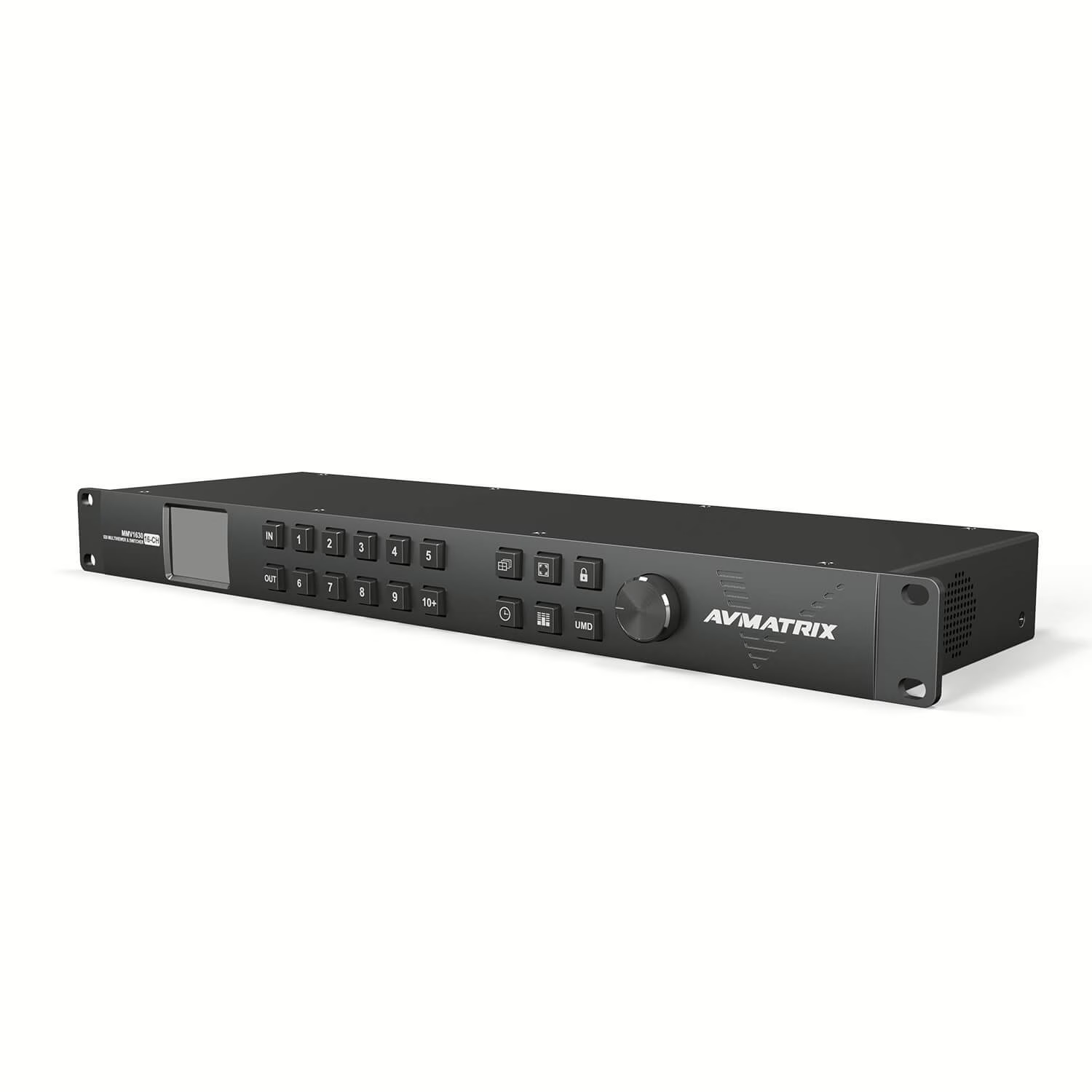
Our SDI matrix switchers route signal directly from input port to output port inside one chassis, with no network configuration, no encoding/decoding latency, and no dependency on network performance. This is exactly why they are the standard choice for broadcast and production environments where reliability and low latency matter most.
How AVoIP (Ethernet) systems differ
AV-over-IP systems instead convert each video source to network packets via an encoder, carry it over a standard network switch, and decode it back to video at each display. This scales to very large numbers of sources and destinations using standard networking infrastructure, but it introduces network design considerations (bandwidth, switch capability) and typically some added latency versus a dedicated point-to-point matrix.
Which approach fits your project
For broadcast control rooms, production trucks and facilities where reliability and minimal latency matter most, a dedicated SDI matrix switcher remains the simpler, more predictable choice. AVoIP tends to make more sense for very large-scale, campus-wide distribution where the number of endpoints would make dedicated matrix hardware impractical.
Not sure which model fits your channel count and budget? Our team can size a system for you.